Switzerland is a paradise for cyclists, offering breathtaking landscapes, crystal-clear lakes, and charming alpine villages. Whether you’re a beginner or an experienced rider, the country’s well-marked routes and scenic trails provide unforgettable experiences. This guide explores the best cycling itineraries, helping you plan your ultimate two-wheeled adventure across Switzerland.
Essential Tips Before You Start
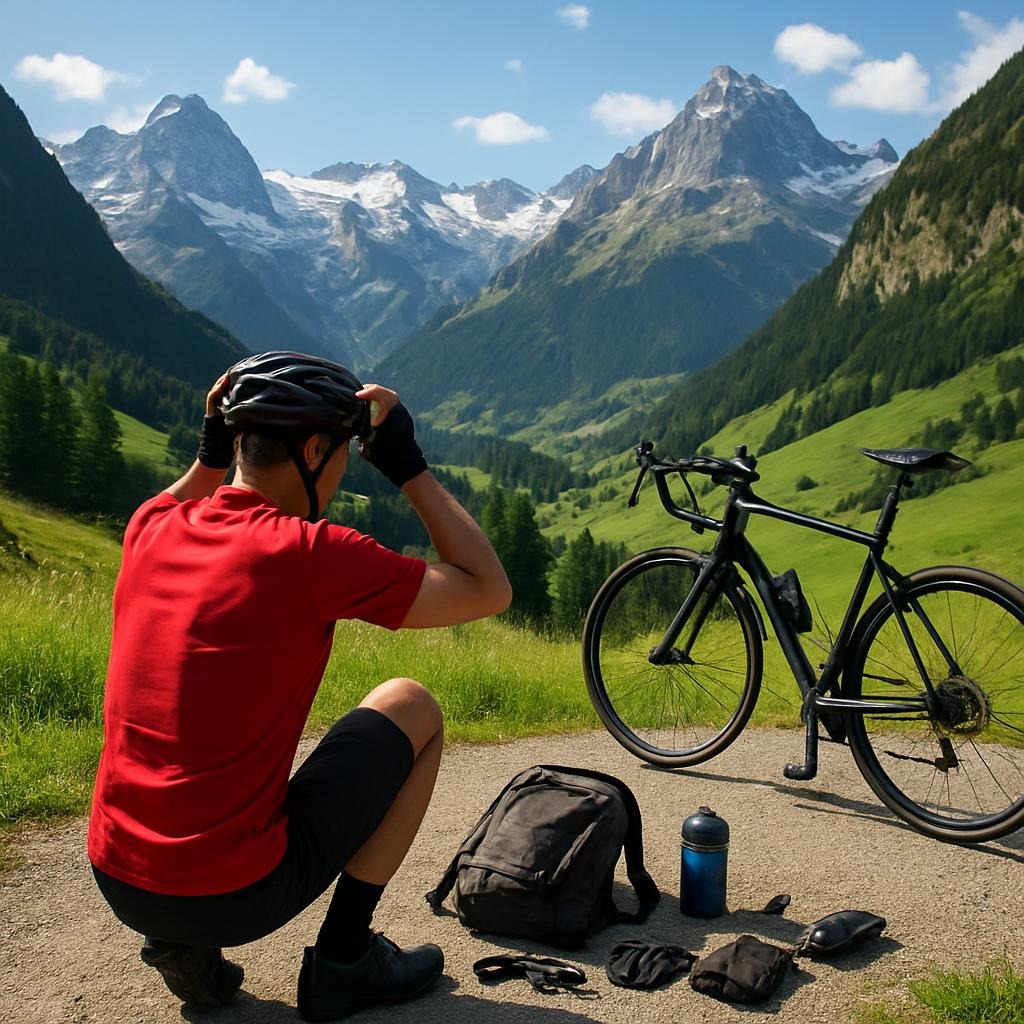
- Choose the best season: late spring to early autumn
- Check your fitness level for the chosen route
- Wear a helmet and padded cycling shorts
- Carry layers for changing mountain weather
- Use waterproof gear in case of rain
- Bring a repair kit: pump, spare tube, multitool
- Hydrate frequently and pack snacks
- Learn basic bike-hand signals
- Rent a bike or bring your own, depending on route
- Plan your daily distance and rest stops
- Download offline maps or GPS routes
- Respect traffic rules and local regulations
Top Scenic Cycling Routes in Switzerland
1. Lake Geneva Route (Easy–Moderate)
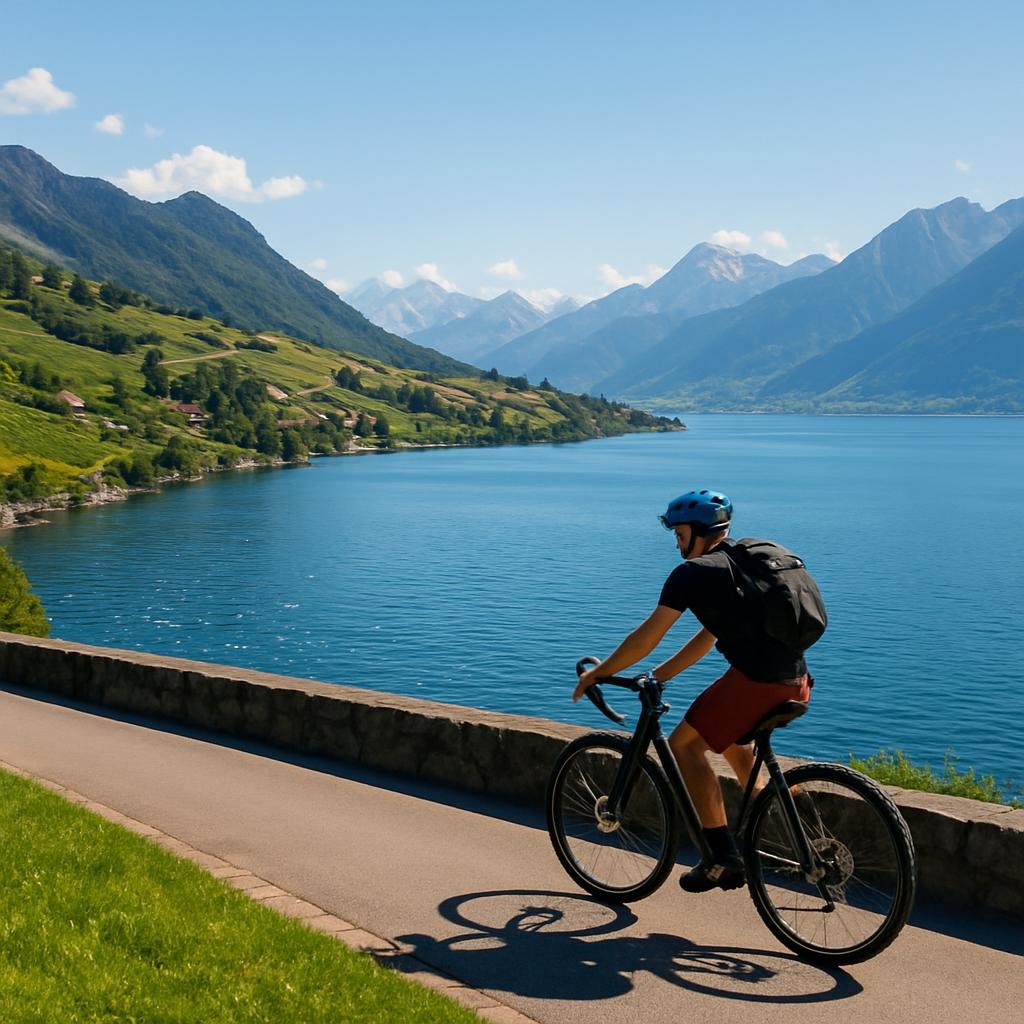
- Route Overview: The Lake Geneva Route stretches along the northern shore of Lake Geneva, connecting Geneva, Nyon, Lausanne, and Montreux.
- Difficulty Level: Easy to moderate; mostly flat terrain with a few gentle inclines near vineyards or small hills.
- Distance & Duration: Full lakeshore route is approximately 120 km, ideal for 2–3 days at a relaxed pace.
- Highlights: Enjoy stunning lake views, rolling vineyards of Lavaux, and charming medieval towns along the shore.
- Scenic Stops:
- Château de Chillon near Montreux
- Olympic Museum in Lausanne
- Geneva’s Old Town and Jet d’Eau
- Vineyards in Rivaz for a quick photo and rest
- Terrain: Mostly smooth asphalt and dedicated bike paths, perfect for road bikes, hybrid bikes, or even e-bikes.
- Family Friendly: Safe routes with low traffic sections, ideal for families with children or beginner cyclists.
- Food & Rest: Plenty of options: lakefront cafés in Montreux, bakeries in Nyon, casual restaurants in Lausanne.
- Accommodation: Choose small hotels, guesthouses, or lakeside inns in towns like Montreux or Lausanne for overnight stays.
- Accessibility: Train-friendly; most stations allow bike boarding for flexible itineraries.
- Tips for Cyclists:
- Start early to enjoy quiet paths
- Take photos at vineyards and lakeside promenades
- Plan overnight stops strategically in Geneva, Lausanne, or Montreux
- Carry water and snacks for longer stretches
2. Lake Lucerne Panorama Route (Moderate)
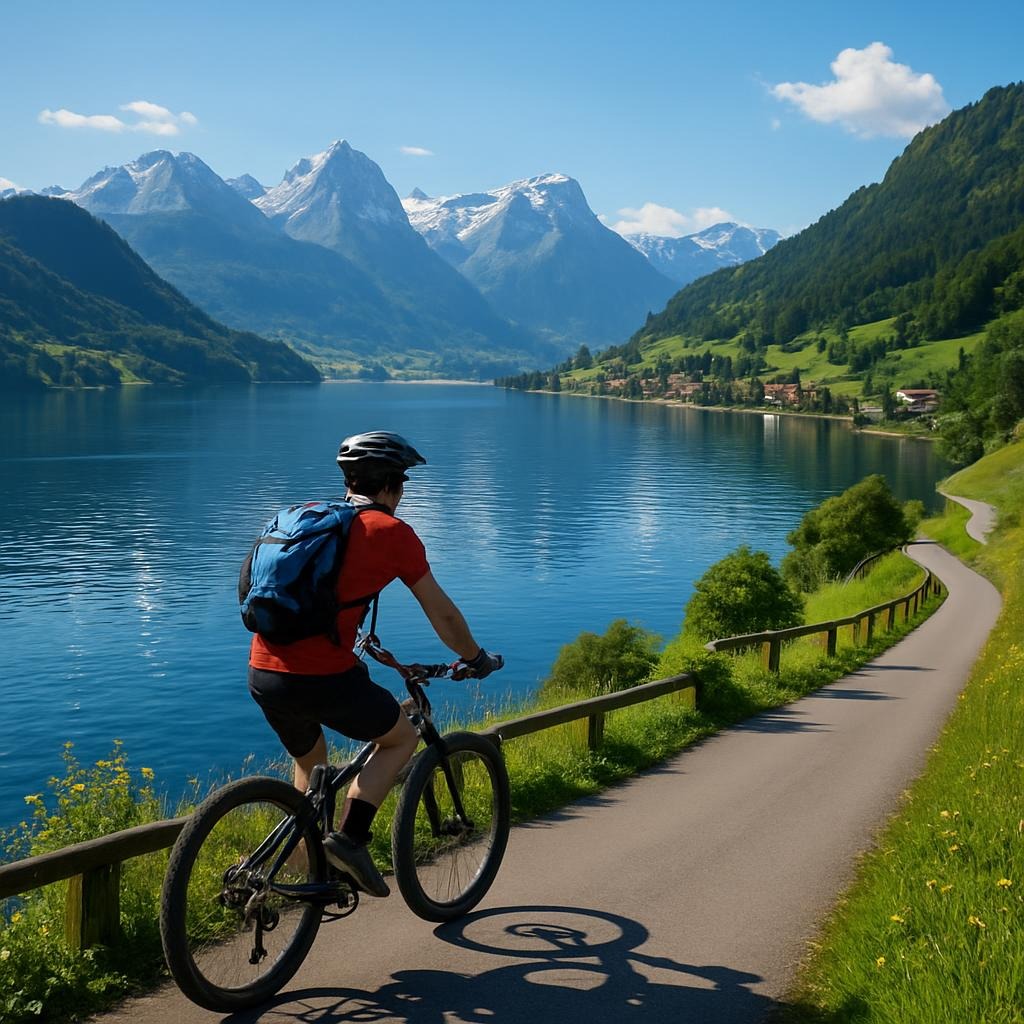
- Route Overview: The Lake Lucerne Panorama Route follows the scenic shores of Lake Lucerne, passing through charming towns and alpine foothills, connecting Lucerne, Weggis, Vitznau, and Brunnen.
- Difficulty Level: Moderate; mostly flat along the lake, with some gentle hills near alpine villages.
- Distance & Duration: Approximately 80–100 km, ideal for 2 days at a relaxed to moderate pace.
- Highlights: Spectacular lake views, mountain reflections in the water, and picturesque villages along the way.
- Scenic Stops:
- Chapel Bridge and Old Town Lucerne
- Lakeside promenade in Weggis
- Vitznau pier with views of Rigi Mountain
- Brunnen waterfront with historic buildings and cafes
- Terrain: Smooth asphalt and dedicated bike paths; some slightly steeper inclines near mountain foothills. Suitable for road bikes, hybrid bikes, or e-bikes.
- Family Friendly: Mostly safe, low-traffic paths along the lakeshore; some hills may challenge beginners.
- Food & Rest: Numerous cafés and restaurants in Lucerne, Weggis, and Brunnen; perfect spots for lunch or coffee breaks.
- Accommodation: Stay in Lucerne for the first night, then smaller guesthouses in Weggis or Brunnen for a lakeside experience.
- Accessibility: Trains and ferries along Lake Lucerne allow flexible route adjustments and bike transport.
- Tips for Cyclists:
- Start early to enjoy calm lake views
- Stop for photos at Rigi and lakeside promenades
- Carry water and light snacks
- Consider e-bikes for hilly sections to save energy
3. Rhine Route (EuroVelo 15) – Long Distance
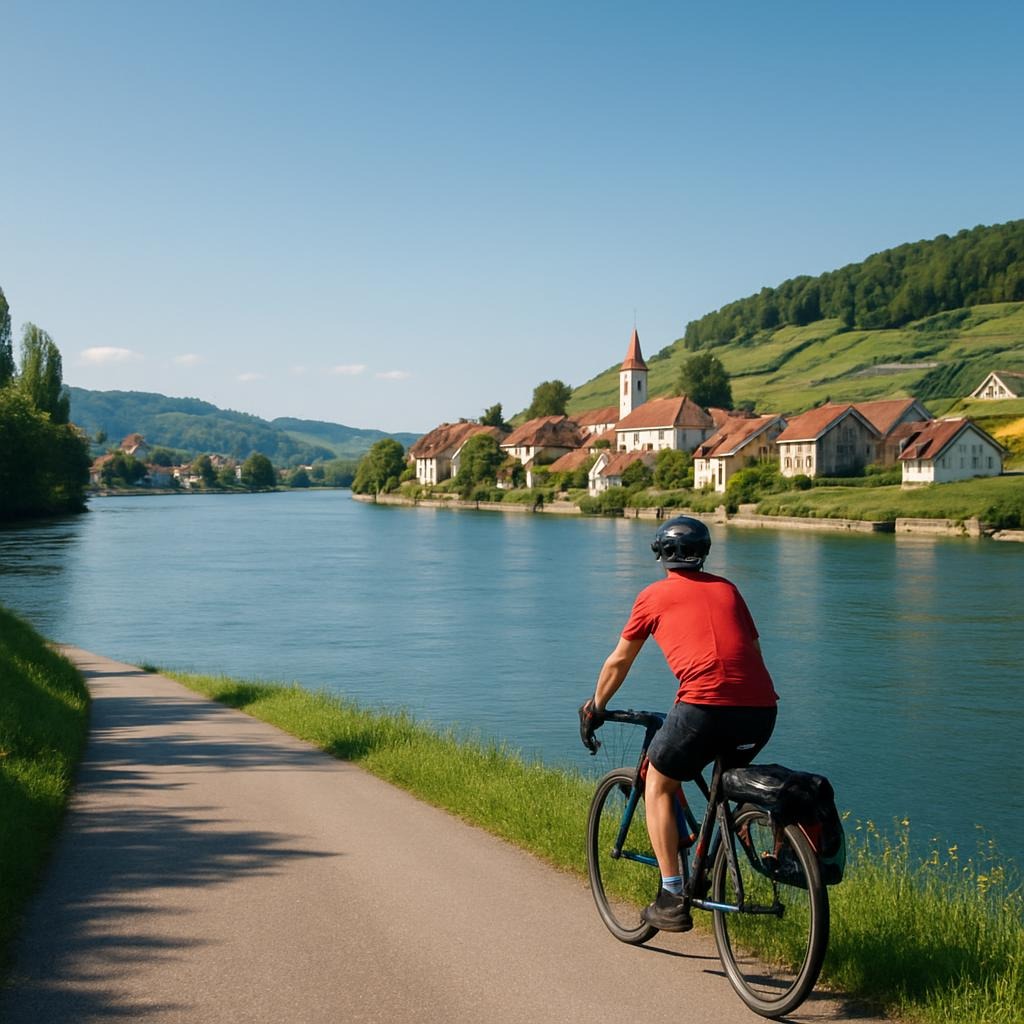
- Route Overview: The Rhine Route (EuroVelo 15) follows the Rhine River through Switzerland, connecting towns like Chur, Schaffhausen, Basel, and crossing into neighboring countries. It’s part of a long-distance European cycling route, perfect for multi-day adventures.
- Difficulty Level: Easy to moderate; mostly flat along the river, with occasional short inclines near river bends or old town centers.
- Distance & Duration: Swiss section covers approximately 300 km; ideal for 4–5 days at a comfortable pace.
- Highlights: Scenic riverbanks, historic towns, vineyards, and cultural landmarks along the Rhine.
- Scenic Stops:
- Rhine Falls near Schaffhausen – Europe’s largest waterfall
- Old town of Basel with its colorful streets
- Vineyards along the Rhine in Rheintal Valley
- Chur, Switzerland’s oldest town, with charming alleys and cafés
- Terrain: Mostly paved roads, dedicated cycling paths along the river, suitable for road bikes, hybrids, or e-bikes.
- Family Friendly: Safe sections along the riverbanks; some towns have busier streets, so extra caution is advised.
- Food & Rest: Cafés and bakeries in towns like Basel, Schaffhausen, and Rheinfelden; picnic spots near riverside parks.
- Accommodation: Hotels, guesthouses, and hostels in key towns along the route, with easy access for overnight stays.
- Accessibility: Train stations allow flexible starts/ends for each day, and most trains permit bike boarding.
- Tips for Cyclists:
- Visit Rhine Falls early to avoid crowds
- Plan stops in historic towns for photos
- Bring water and snacks for long stretches
- Consider e-bikes for a relaxed pace over multiple days
4. Lauterbrunnen Valley Route (Easy + Impressive Views)
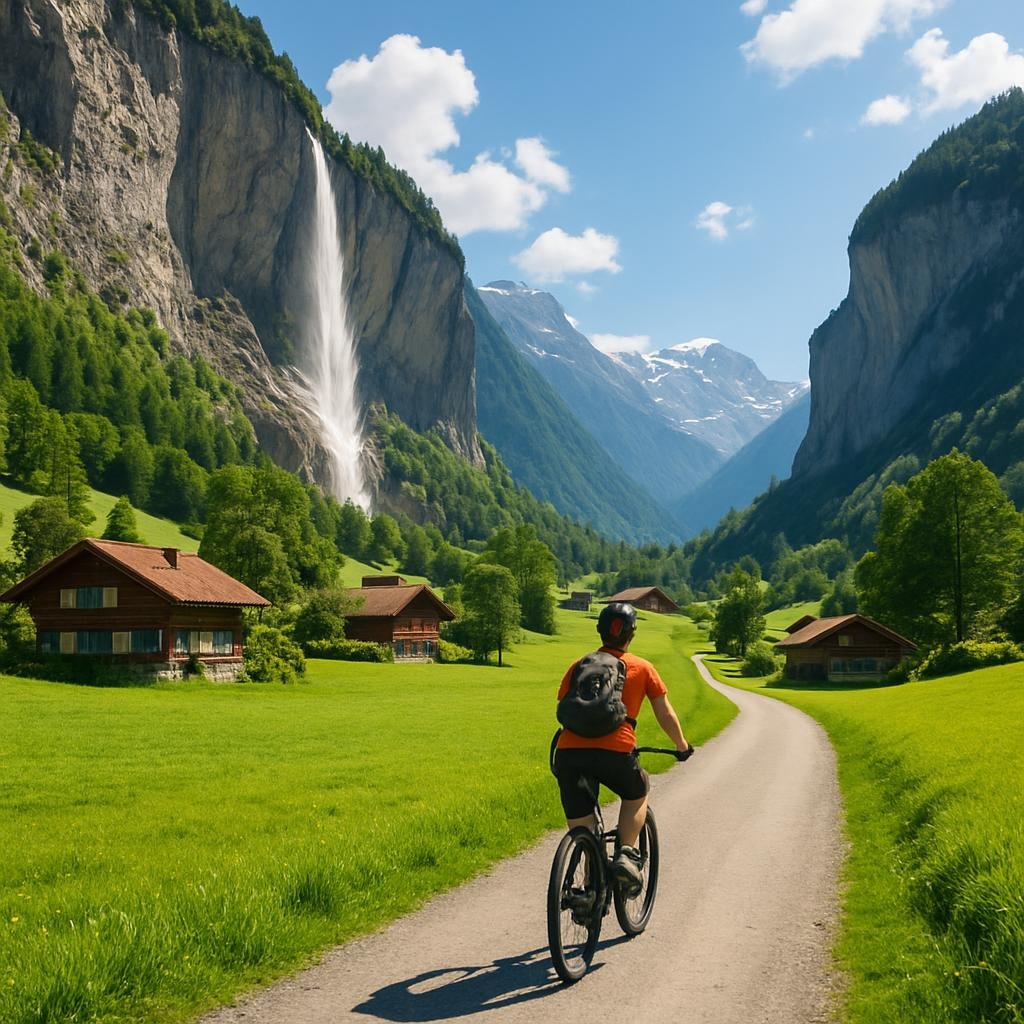
- Route Overview: The Lauterbrunnen Valley Route follows the lush valley floor from Lauterbrunnen village to Stechelberg, offering breathtaking views of alpine cliffs and waterfalls. Perfect for a short, scenic ride in the heart of the Swiss Alps.
- Difficulty Level: Easy; mostly flat along the valley with minimal elevation changes.
- Distance & Duration: Approximately 12–15 km, ideal for half a day at a leisurely pace.
- Highlights: Stunning 72 waterfalls, green meadows, traditional Swiss chalets, and panoramic alpine scenery.
- Scenic Stops:
- Staubbach Falls, one of Switzerland’s tallest free-falling waterfalls
- Trümmelbach Falls, impressive glacier-fed waterfalls inside the mountains
- Lauterbrunnen village, with cozy cafés and shops
- Stechelberg for alpine meadow views and quiet trails
- Terrain: Mostly paved or gravel paths; suitable for all types of bikes including road, hybrid, and e-bikes.
- Family Friendly: Excellent for families with children or beginners due to minimal hills and safe paths.
- Food & Rest: Cafés and small restaurants in Lauterbrunnen village; picnic spots along the valley floor.
- Accommodation: Stay in Lauterbrunnen for easy access to the route and nearby hiking trails.
- Accessibility: Well-connected by trains and local buses; bikes can be taken on the Lauterbrunnen–Stechelberg bus if needed.
- Tips for Cyclists:
- Go early in the morning for fewer crowds
- Stop frequently to photograph waterfalls and chalets
- Wear comfortable shoes for short off-bike walks
- Carry water and light snacks
5. Swiss National Route No. 4 (Alpine Classic – Advanced)
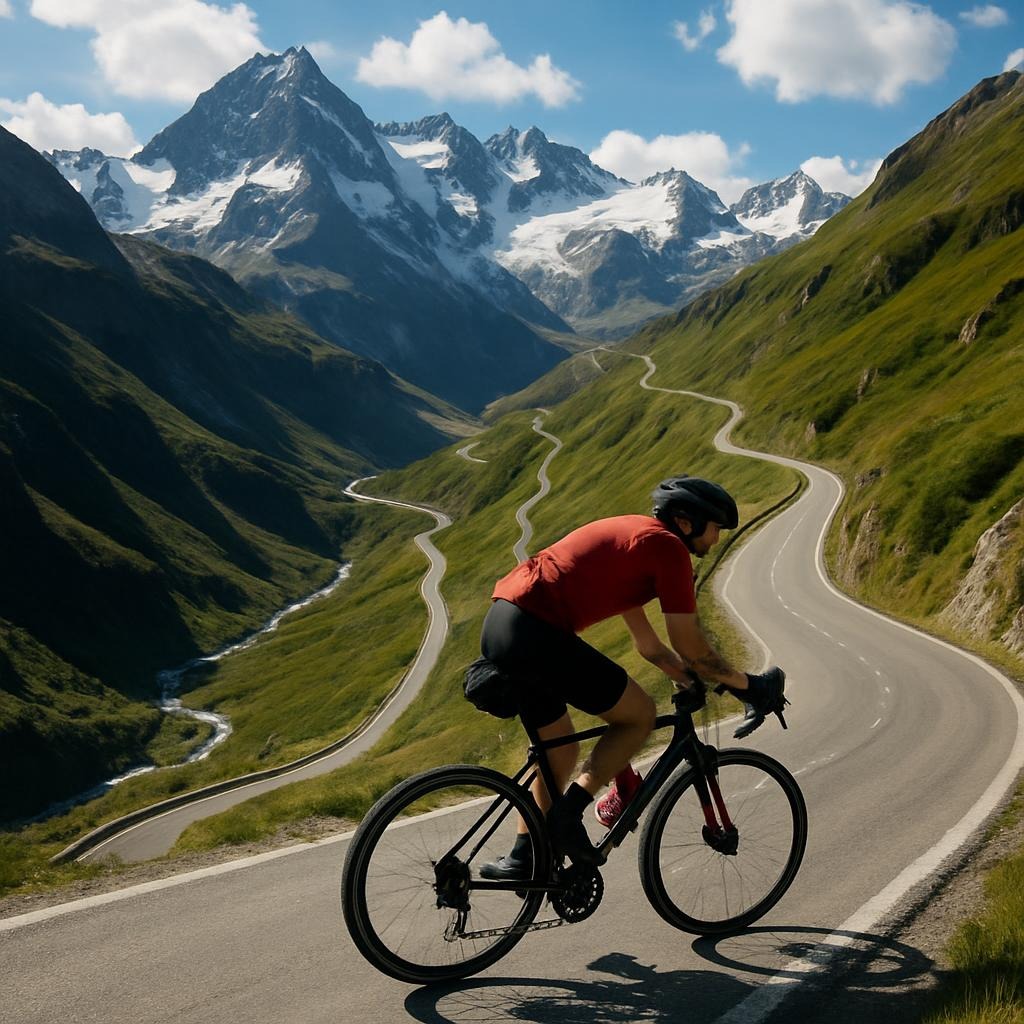
- Route Overview: The Swiss National Route No. 4, also known as the Alpine Classic, is a challenging long-distance route crossing the Swiss Alps. It connects towns like Andermatt, Andeer, Chur, and Davos, offering dramatic alpine scenery and high mountain passes.
- Difficulty Level: Advanced; requires strong fitness, experience with long climbs, and stamina for multi-day rides.
- Distance & Duration: Approximately 400 km, typically completed over 5–7 days depending on pace.
- Highlights: Majestic alpine landscapes, snow-capped peaks, glacier views, and historic mountain villages.
- Scenic Stops:
- Oberalp Pass, a high alpine pass with panoramic vistas
- Andermatt, a historic alpine town with traditional architecture
- Viamala Gorge, dramatic rock formations and walking trails
- Davos, famous for winter sports and alpine scenery
- Terrain: Mountain roads with steep climbs, switchbacks, and occasional narrow sections; mainly paved, suitable for road bikes or e-bikes designed for climbing.
- Family Friendly: Not recommended for beginners or children due to elevation and difficulty.
- Food & Rest: Alpine inns and small mountain cafés along the route; plan stops strategically for refueling.
- Accommodation: Guesthouses or hotels in key towns like Andermatt, Chur, and Davos; book in advance during peak season.
- Accessibility: Train connections available for segments if needed; some trains allow bikes.
- Tips for Cyclists:
- Start early to avoid afternoon weather changes
- Carry sufficient water, energy bars, and repair tools
- Be prepared for sudden alpine weather changes
- Pace yourself on steep climbs, consider e-bike assistance
3-Day Cycling Itinerary in Switzerland (Sample Plan)
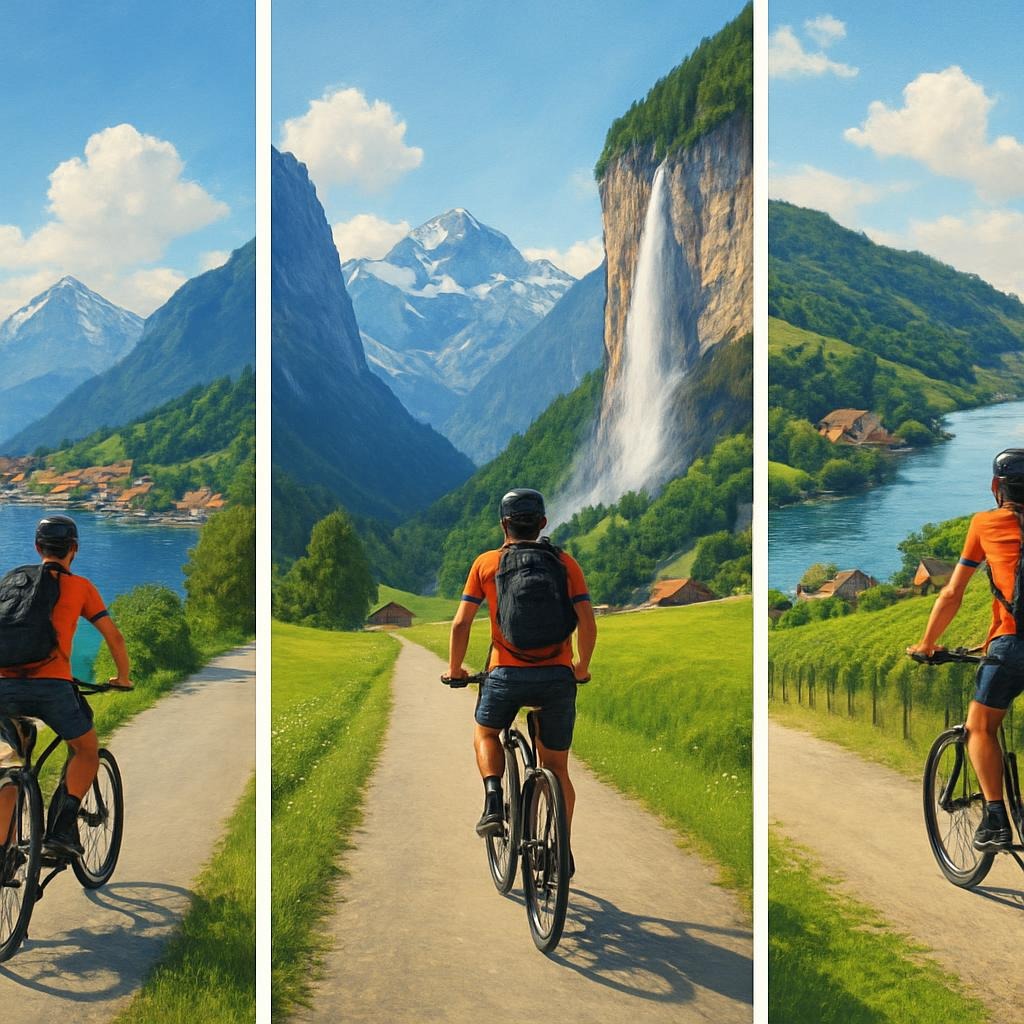
Day 1: Lake Lucerne & Surrounding Villages
- Start in Lucerne: Explore the Chapel Bridge and Old Town, taking in historic streets and lakeside views.
- Bike along the lake: Follow the Lake Lucerne bike path toward Weggis, enjoying calm waters and reflections of nearby mountains.
- Weggis stop: Relax at a lakeside café, take photos of the Rigi mountains, and enjoy the small village charm.
- Vitznau detour: Optional short ride to Vitznau pier, with panoramic lake and alpine views.
- Lunch break: Choose a restaurant in Weggis or a picnic by the lake.
- Afternoon ride: Continue along gentle paths toward Brunnen, passing vineyards and lakeside promenades.
- Scenic viewpoints: Stop at Rütli Meadow or small lookout points along the shore for photos.
- Evening in Brunnen: Check into a guesthouse or hotel, enjoy dinner with a view of the lake, and rest for the next day.
- Tips: Start early, carry water, and take short breaks to fully enjoy the scenery.
Day 2: Lauterbrunnen Valley
- Start in Lauterbrunnen village: Begin your ride with views of the iconic Staubbach Falls and charming Swiss chalets.
- Ride along the valley floor: Follow the flat valley path toward Stechelberg, surrounded by towering cliffs and alpine meadows.
- Trümmelbach Falls detour: Stop to see glacier-fed waterfalls inside the mountains, a short walk from the path.
- Picnic spot: Enjoy a break near Valley Viewpoint, with waterfalls in the background.
- Continue toward Stechelberg: Pass small villages and lush meadows, observing local farms and cows grazing.
- Optional short hikes: Explore trails leading to Alpbach or Mürren viewpoints for panoramic alpine views.
- Lunch & café stop: Have lunch in Lauterbrunnen or bring a packed picnic.
- Return ride: Cycle back along the valley floor, stopping at waterfalls or small photo points.
- Evening: Relax in Lauterbrunnen village, enjoy dinner at a local restaurant, and prepare for the next day.
Day 3: Rhine Route Section
- Start in Chur or Schaffhausen: Begin your ride along the Rhine River, enjoying flat, scenic paths ideal for a longer cycling day.
- Rhine Falls detour: Stop at Europe’s largest waterfall near Schaffhausen for photos and short walks along the observation platforms.
- Cycling along vineyards: Pass through the Rheintal Valley, with rolling vineyards and charming villages along the riverbanks.
- Historic towns stop: Explore Basel’s old town or smaller villages like Rheinfelden, taking in colorful streets and riverside cafés.
- Lunch break: Choose a riverside café or picnic along quiet river stretches.
- Smooth river paths: Continue cycling along well-marked EuroVelo 15 routes, enjoying low-traffic roads and scenic river views.
- Optional sightseeing: Visit small historic bridges, castles, or local markets along the Rhine.
- Evening arrival: Check into hotels or guesthouses in Basel or Schaffhausen.
- Tips: Carry water and snacks, take frequent photo stops, and enjoy the calm river scenery.
Bike Rental Options & E-Bike Tips
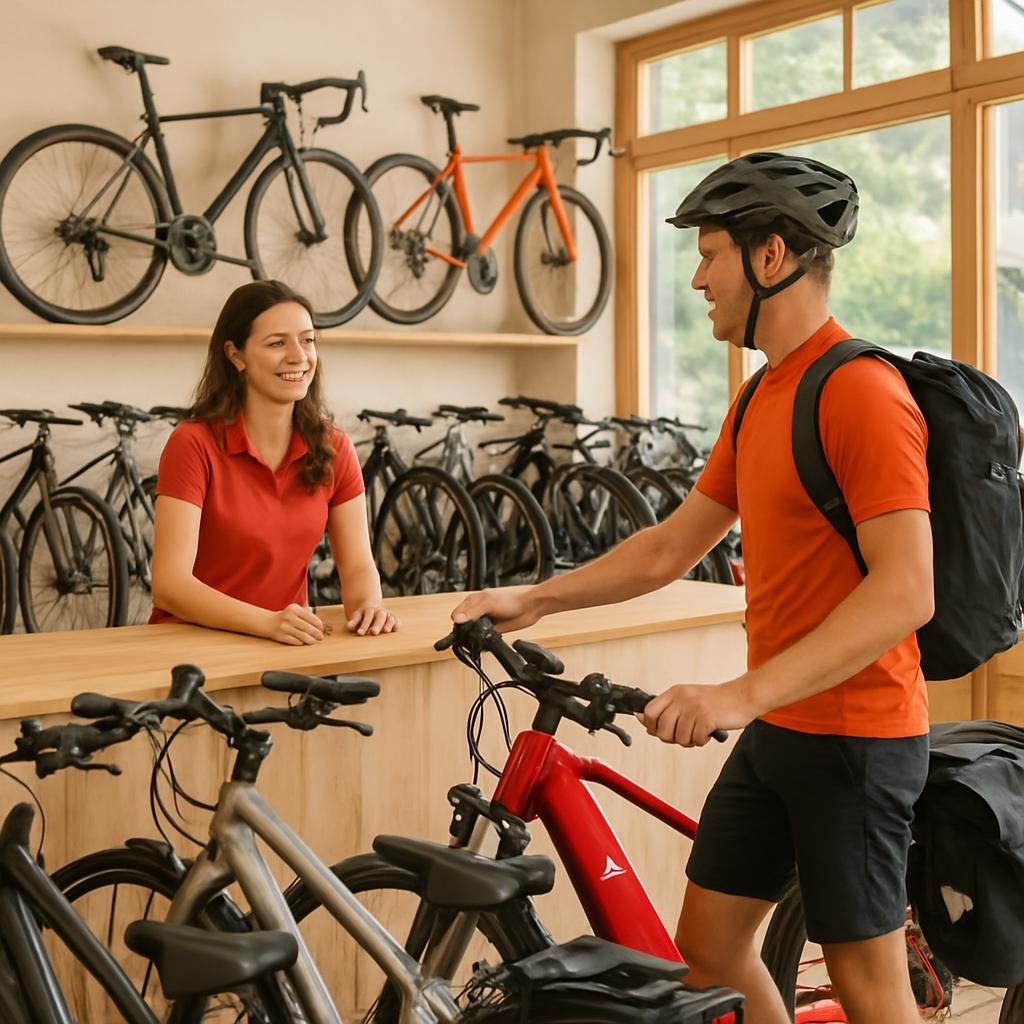
- Zurich rental shops: Rent road bikes, hybrids, or e-bikes in the city center.
- Lucerne rental options: Choose from lakeside shops with daily or multi-day rates.
- Interlaken rentals: Perfect for adventure routes and mountain trails.
- E-bike advantage: Helps on steep alpine climbs, ideal for moderate to advanced routes.
- Rental duration: Daily, multi-day, or week-long options available.
- Accessories included: Helmets, locks, and panniers often provided.
- Reservations: Book in advance during peak season to secure availability.
- Charging stations: Found in towns like Lucerne, Interlaken, and Montreux.
- Maintenance: Minor repairs often included with rentals.
- Flexibility: Return bike at different locations depending on your itinerary.
Where to Stay During a Cycling Trip
- Lucerne: Stay near the lake or Old Town for easy access to cycling routes.
- Weggis & Vitznau: Small lakeside guesthouses with mountain views.
- Brunnen: Central location for Lake Lucerne and surrounding trails.
- Lauterbrunnen: Ideal base for valley routes and nearby waterfall stops.
- Stechelberg & Mürren: Alpine guesthouses for scenic views and hiking options.
- Interlaken: Convenient for Jungfrau region routes and lake cycling.
- Basel: Central location for Rhine Route cycling and historic sites.
- Accommodation types: Hotels, guesthouses, inns, or family-run B&Bs.
- Booking tip: Reserve in advance during peak season.
- Amenities: Look for bike storage, easy access to paths, and local restaurants nearby.
Packing List for Cyclists
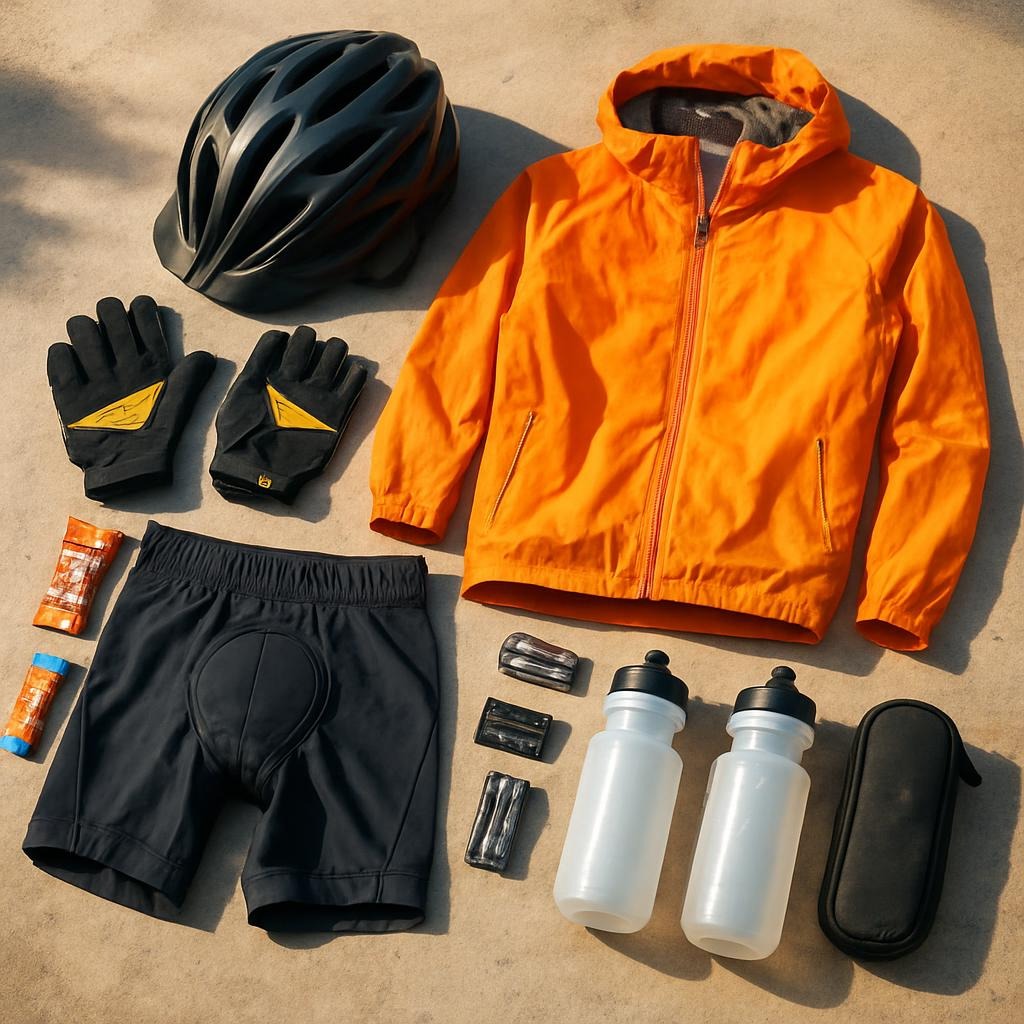
- Helmet: Essential for safety on all routes.
- Padded cycling shorts: For comfort on long rides.
- Gloves: Reduce hand fatigue and improve grip.
- Layered clothing: Lightweight layers for changing alpine weather.
- Waterproof jacket: Protects against rain or wind.
- Cycling shoes: Compatible with pedals or comfortable for flats.
- Repair kit: Spare tube, mini-pump, tire levers, and multitool.
- Water bottles: Stay hydrated throughout the ride.
- Snacks: Energy bars or fruits for quick refueling.
- Sunglasses & sunscreen: Protect eyes and skin from sun and glare.
Budget: Approximate Costs
- Bike rental: Road bikes or e-bikes cost CHF 30–60/day, depending on type.
- Accommodation: Hotels or guesthouses range from CHF 80–150/night, alpine stays slightly higher.
- Food: Casual meals cost CHF 15–30, cafés or picnic supplies cheaper.
- Train transport: Swiss Travel Pass or regional tickets for bike transport, approx. CHF 10–25/day.
- Attractions: Entry fees for museums, castles, or waterfalls, CHF 5–15 each.
- Snacks & water: Budget CHF 5–10/day for energy bars and hydration.
- Miscellaneous: Small repairs, souvenirs, or parking, around CHF 10/day.
- Total estimate: CHF 60–120/day, depending on route and comfort level.
Conclusion
Switzerland by bike is basically nature showing off… and you pedaling like a caffeinated goat. Expect epic views, tiny villages that feel straight out of a postcard, and calves that suddenly have a mind of their own. Cycle, snack, repeat — and maybe consider an e-bike for sanity!